
(833) 391-1038
24/7 Assistance
IRS debt forgiveness is a program that allows qualifying taxpayers to reduce or eliminate the amount they owe to the Internal Revenue Service (IRS). If you are struggling with unpaid taxes, IRS debt forgiveness could offer a real solution for gaining control over your finances. Along with other options like IRS tax relief and IRS back taxes help, these programs are designed to help individuals and businesses resolve outstanding debts and avoid severe penalties.
In this article, we will walk you through what IRS debt forgiveness is, who qualifies, the available programs, and how to get started. Whether you’re facing serious tax debt or just want to better understand your options, this guide will provide simple, step-by-step information to help you explore available options.
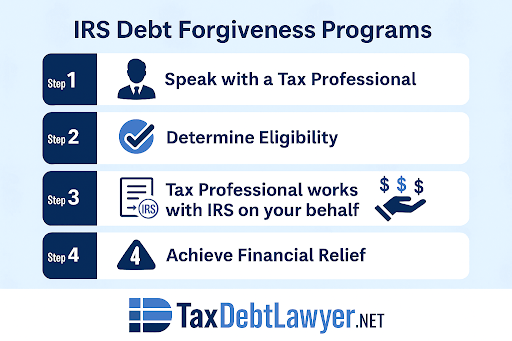
IRS debt forgiveness is a program that allows taxpayers to settle their outstanding tax debt for less than the full amount they owe. If you cannot afford to pay your full tax balance, the IRS offers several options to either reduce your debt, delay payment, or sometimes eliminate it completely. These programs are designed to help people who are facing serious financial hardship and cannot meet their tax obligations.
It’s important to understand that IRS debt forgiveness is not the same as IRS tax relief or IRS debt relief. While they are related, they serve slightly different purposes. IRS tax relief is a broader term that refers to any program or policy designed to ease the financial burden of paying taxes. This can include deductions, credits, and payment plans. On the other hand, IRS debt relief specifically targets taxpayers who already owe back taxes and need help resolving their debt through negotiation or settlement programs.
In short, IRS debt forgiveness is one type of debt relief focused on helping taxpayers who owe the IRS more than they can reasonably pay. It offers a fresh start for those who qualify, giving them a way to resolve their debt without being buried by overwhelming payments.
Not everyone will qualify for IRS debt forgiveness, but the IRS does offer options for taxpayers who are truly struggling. To be eligible, you must usually show that paying your full tax debt would create a serious financial hardship. The IRS considers your income, expenses, assets, and overall financial situation before approving any form of debt forgiveness.
Generally, you may qualify for IRS debt forgiveness if:
The IRS uses strict income guidelines and financial analysis tools when reviewing forgiveness applications. If your disposable income is very limited, you may have a better chance of qualifying. In many cases, working with a professional who understands IRS tax negotiation can provide guidance through the application process. To find out if you qualify, complete the short form on this page or call the number provided to speak with a tax relief specialist today.
If you owe IRS back taxes and believe you might qualify, it’s important to act quickly. Programs like the Offer in Compromise (OIC) or Currently Not Collectible (CNC) status are not automatic — you must apply and provide detailed financial information. Seeking IRS back taxes help from experienced professionals can provide assistance with preparing and submitting paperwork.
The IRS offers several programs under its IRS debt forgiveness options to help taxpayers find relief. Each program is designed for different financial situations, and choosing the right one can make a big difference. Let’s explore the most common types of IRS debt relief programs available today.
An Offer in Compromise allows you to settle your tax debt for less than the total amount you owe. This program is ideal for individuals who genuinely cannot pay their full tax bill without financial hardship. The IRS reviews your income, expenses, assets, and future earning potential to determine if they can accept a lower amount.
An OIC is considered one of the most powerful forms of IRS tax relief because it can significantly reduce your debt. However, it’s important to note that the IRS accepts only a small percentage of offers submitted. Getting professional help with your application can provide guidance on requirements and documentation.
If you’re facing extreme financial hardship, you might qualify for Currently Not Collectible (CNC) status. This means the IRS temporarily pauses all collection efforts against you, such as wage garnishments, levies, or liens.
While CNC status does not erase your debt, it gives you breathing room until your financial situation improves. The IRS will periodically review your case to see if your ability to pay has changed. For many struggling taxpayers, CNC status offers vital IRS debt relief during tough times.
Sometimes, paying your full tax debt is possible, but not all at once. In this case, an IRS Installment Agreement allows you to pay off your debt over time through monthly payments.
There are several types of Installment Agreements depending on how much you owe. These agreements are a popular form of IRS tax relief because they make it easier to manage large tax bills without facing aggressive collection actions. Although you will still owe penalties and interest while on a payment plan, it prevents the IRS from taking more serious enforcement steps against you.
The IRS charges penalties for things like filing late, paying late, or not filing at all. These penalties can add up quickly and make your total debt much higher than the original tax amount. Penalty Abatement Programs offer a way to reduce or eliminate some of these extra charges.
You might qualify for penalty relief if you have a good payment history or can show reasonable cause for falling behind. Examples include serious illness, natural disasters, or unexpected hardships. Reducing penalties is another valuable form of IRS debt relief that can significantly lower the amount you ultimately need to pay.
Applying for IRS debt forgiveness can seem overwhelming, but breaking it down into simple steps makes the process easier to manage. Here’s a clear guide to help you start:
Before you apply, take a close look at your income, expenses, assets, and debts. The IRS will ask for detailed financial information, so it’s important to have everything ready. Being honest and organized from the start can save you time and stress.
Decide which program fits your situation:
Understanding your options is key to finding the right path to IRS debt relief.
The IRS requires specific forms depending on the program you are applying for:
Make sure you complete all forms accurately and provide any requested documentation, such as pay stubs, bank statements, or bills.
Send your completed forms and supporting documents to the IRS. Some programs also require a small application fee or initial payment when you apply. Be sure to read the instructions carefully to avoid mistakes that could delay your application.
After you submit your application, the IRS may ask for more information. Respond quickly and completely. If you ignore their requests, your application could be denied.
While it’s possible to apply on your own, working with an experienced tax professional can make a big difference. If your case is complicated, if you owe a large amount, or if you’re unsure which program to choose, it’s smart to seek IRS tax negotiation assistance. Get the help you need—complete the form on this page or call now to speak with a qualified tax expert who can guide you through your options.
Tax attorneys, enrolled agents, and other tax professionals understand the IRS rules and can help you present your case in the best possible way. They can also negotiate directly with the IRS on your behalf and handle communications throughout the process.
Applying for IRS debt forgiveness can open the door to major financial relief—but making mistakes during the process can lead to delays, denials, or even bigger problems. Here are some of the most common mistakes people make when trying to settle their IRS debt, and how you can avoid them.
While some taxpayers may be able to manage a simple payment plan on their own, applying for IRS debt forgiveness is often more complicated than it seems. In many cases, getting professional help can make the difference between success and failure when dealing with the IRS.
If you owe a large amount in back taxes, have complicated financial records, or are applying for programs like an Offer in Compromise, it’s a smart idea to work with a tax professional. Tax attorneys, enrolled agents, and tax relief specialists have the training and experience needed to navigate IRS procedures and rules. They understand how to present your case, negotiate with the IRS, and assist with the application process.
Professional IRS tax relief services can also help if you are already facing serious IRS collection actions, like wage garnishments, bank levies, or property liens. They can step in quickly to halt these actions while negotiating a solution with the IRS on your behalf.
Another important reason to seek help is when you simply feel overwhelmed by the paperwork and requirements. Applying for IRS debt relief is not just about filling out forms; it requires a detailed financial analysis, documentation, and sometimes ongoing communication with IRS agents. Having a trusted professional by your side can provide guidance and representation throughout the process.
In short, if your tax situation is complicated or you feel uncertain about the process, professional help can be a wise investment. With the right support, you can navigate the IRS debt relief process and understand available options.
Finding real solutions for unpaid taxes may feel overwhelming, but IRS debt forgiveness programs offer a clear path toward financial recovery. Whether you qualify for an Offer in Compromise, an Installment Agreement, Currently Not Collectible status, or Penalty Abatement, there are real options available to help you manage or even eliminate your tax burden.
Understanding the different types of IRS debt relief is the first step. Choosing the right program based on your financial situation can make a major difference in your future. Whether you owe a few thousand dollars or are dealing with serious IRS back taxes, there are ways to find relief and avoid aggressive collection actions.
If you are unsure where to start, seeking help from tax professionals who specialize in IRS tax relief can give you the guidance and confidence you need. With the right support, you can navigate IRS procedures, prepare applications, and explore settlement options.
Don’t let unpaid taxes control your life. By taking action today, you can begin exploring IRS debt forgiveness options and available relief programs.
